Building an AI Chatbot in 2025: Tools and Tips

AI Chatbots have come a long way from simple scripted bots to conversational agents that recognize not only context and tone but emotion. In 2025, with great tools that readily use the AI models so easily available, there has never been a better time to build a sophisticated chatbot/user experience.
As a first step, decide on your use case: customer support, lead generation, personal assistant, educational bot, etc. After your use case is determined, you can choose the appropriate tools. For Natural Language Processing (NLP), tools like OpenAI's GPT-4.5, Google's Dialogflow CX or Rasa Open Source can provide context and understanding of the customers objective and goal. If you don't want to code, you can leverage low-code or no-code solutions like Botpress, Tidio or ManyChat if you want a drag-n-drop option.
If you are a developer, you can build a custom front-end chat using a variety of tools based on your preference such as Node.js, Python (Flask/FastAPI) or React, and use LangChain or LLMChain to connect your AI to the various components. If you felt your chatbot/application had to be context-aware, you might consider integrating a vector database such as Pinecone,Weaviate or ChromaDB to preserve conversation history and create knowledge-based data.
A few final notes:
Train with real data: the more context you share, the more human-like your bot will feel.
Focus on UX: include a typing indicator, fallback responses, or human hand-off.
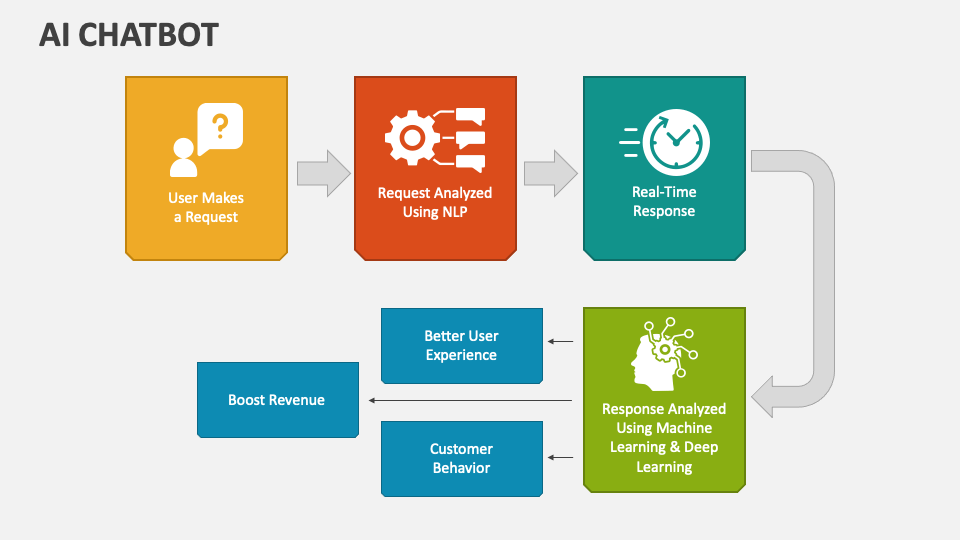
Flowchart